


Good promotional content needs to do more than capture attention. Readers should understand the product, the benefits that matter to them and the next step they can take. Copywriting techniques help businesses communicate concise, persuasive messages while remaining accurate and accountable.
This article explains five techniques for digital advertisements, landing pages, email, catalogs and social media. Each includes examples, ways to evaluate results and common mistakes that can lead to exaggerated claims.
What is Copywriting in Promotional Materials?
Copywriting is the process of crafting messages with the goal of encouraging a specific action, such as reading product information, filling out a form, contacting a business, or making a purchase. Unlike informational writing, which focuses on explaining a topic, copywriting is usually structured according to the customer’s decision-making stage.
This goal doesn’t mean every message should compel people to buy. In the early stages, the copy’s job might simply be to help potential customers understand their problem and solution options. Effective promotional materials maintain consistency between the advertising message, the actual offer, and the landing page.
The role of copy is also closely related to important elements in advertising: message, audience, benefits, evidence, visuals, and call to action must support each other.

What Should You Prepare Before Writing Copy?
Get to Know Your Audience and the Problem You Want to Solve
Determine who your readers are, their primary needs, the context in which they’re viewing your promotion, and any potential objections. Copy for a small business owner new to accounting software, for example, will differ from copy for a finance team requiring complex integrations and reporting.
Create an Offer That’s Actually Available
Check the features, price, promotional limits, terms of service, and supporting evidence. Don’t create a ‘50% off’ message if the product in question isn’t included in the promotion. Google Ads has misrepresentation policy which include prohibiting inaccurate claims and offers that are unavailable or hard to find.
Set One Goal for Each Material
A short ad is usually clearer when it focuses on one primary action. If the goal is to obtain a consultation, explain why it’s useful and how to schedule one. If the goal is direct sales, highlight key benefits, pricing, or conditions, then direct them to the product page.
5 Copywriting Techniques for Promotional Materials with Examples
1. Use straightforward language, but remain polite.
Effective copy helps readers find key information without having to interpret long sentences. Avoid layered verbiage that detracts from the main message. However, don’t equate straightforward language with crude communication. Word choice should still align with brand identity and target audience expectations.
Starting from the Main Benefits
Less effective example: ‘With great humility and appreciation, we would like to inform all our customers that our latest product is now available.’ A more direct alternative: ‘Manage orders and inventory in one dashboard. See how it works through the product demo.’
Use Easy-to-Scan Sentences
Separate benefits, evidence, and actions into clear sections. This readability principle aligns with the guidelines Nielsen Norman Group on web writing, which emphasizes easy-to-scan text, meaningful headings, and focused paragraphs.
Choose a Headline that Represents the Advertising Promise
Headlines can address a problem, benefit, product category, or offer. Avoid sensational titles that don’t align with the content. Further discussion is available in the article. definition and examples of headlines.
2. Avoid Exaggerated Claims That Cannot Be Proven
Claims such as “guaranteed to be number one,” “100% guaranteed results,” or “cheapest in Indonesia” require a strong basis and are often misrepresented as certainties. Besides eroding reader trust, unrealistic claims can raise issues with advertising policies and consumer protection.
Replace Superlatives with Specific Details
Instead of ‘the best software for all businesses,’ write ‘sales tracking, inventory tracking, and concise reporting features for stores looking to manage daily transactions.’ The second message describes testable capabilities without promising results for everyone.
Differentiate between Facts, Testimonials, and Opinions
If using customer testimonials, ensure they are used with permission and are not altered to mislead. When citing case study results, provide context; the results of one client may not be generalizable to all businesses.
Check Ad Compliance with Landing Page
The benefits promised by the ad should be readily available on the landing page. Also, pay attention to pricing terms, promotion duration, and product availability. Learn the characteristics of good promotional content at characteristics of effective advertising.
3. Provide Relevant Reasons for Choosing the Product
Customers need a reason for their problem, not just a list of features. Connect features to meaningful outcomes. For example, an invoice reminder feature can help your team track unpaid bills; but it doesn’t automatically guarantee that all customers will pay on time.
Use Feature, Benefit, and Context Relationships
Organize your message in the following order: what are the features, what are the benefits, and in what situations those benefits are relevant. Example: ‘Low stock notifications help store owners know which items need to be reordered before they run out.’ This makes it easier for readers to visualize the product’s usefulness in their daily activities.
Answer One Major Objection
If the product seems complicated, provide information about tutorials or onboarding support that are actually available. If buyers are concerned about cost, display packages and pricing terms transparently. Don’t hide limitations that will influence their decision.
Connect Messages to Funnel Stages
New audiences may require education, while potential buyers who have already compared providers may require more detailed evidence. Therefore, advertising and promotional purposes must be tailored to the customer journey stage.
4. Use Valid Numbers to Create Concrete Messages
Numbers can help readers understand the size, duration, or limits of a service. However, they are not decorative. If you write “used by 10,000 businesses,” you must provide credible evidence, including a timeframe or definition of the users being counted.
Prioritize Numbers That Influence Decisions
Examples of useful numbers include storage capacity, product size, warranty duration, number of users on a plan, or delivery schedule. Information like “the plan supports five team members” is more telling than “the plan is very flexible” if five users is the service limit.
Explain the Terms of Promotion Numbers
If there’s a discount, state the validity period and the eligible categories. If you’re citing improvement results based on a case study, explain the methodology and measurement period. Without context, numbers can create misleading expectations.
Don’t Make Up Statistics to Strengthen Copy
When data isn’t readily available, use testable qualitative descriptions or conduct data collection first. Made-up numbers will only make the material appear credible on the surface, but risk damaging your brand’s reputation.
5. Offer a Clear Solution and End with a Relevant CTA
Successful copy connects the problem with the benefit, then gives the reader the next step. Call to action Or the CTA could be ‘View feature list,’ ‘Compare plans,’ ‘Schedule a demo,’ or ‘Download guide.’ Choose an action that’s actually available on the landing page.
Create a Specific CTA
‘Click here’ is often less informative if the reader doesn’t know the outcome of the click. Try ‘View a sample report’ or ‘Try the cost calculator.’ These sentences provide a concrete idea of what will happen next. If you’re directing the conversation, also read: WhatsApp CTA function on the website.
Don’t Over-Press the Reader
Urgent phrases like “buy now or miss out” should be avoided if they are not factual. Urgency can be implied if the offer actually expires, but avoid creating false deadlines.
Match CTA to Traffic Source
Visitors from educational articles might be ready to read case studies first, while visitors from specific product ads might be directed directly to the purchase page. Maintain message consistency to reduce confusion.
Copywriting Example Before and After Improvement
Examples for Website Creation Services
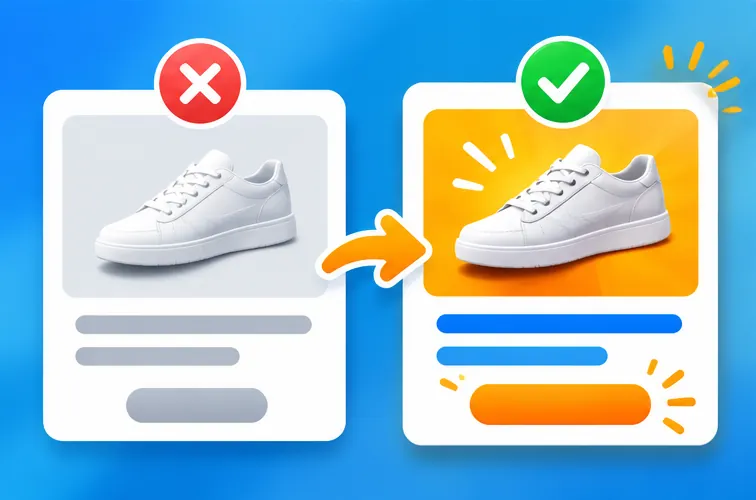
Before: ‘We are the best, fastest website provider, and we are sure to make your business successful.’ After: ‘Need a business website that’s easy to update? We help design service pages, contact forms, and navigation structures to suit your business needs. See our service offerings and our development process.’
Examples for Digital Products
Before: ‘This tool makes your work a hundred times faster.’ After: ‘Organize tasks, who’s responsible, and project deadlines in one list that your team can track. Try the demo to see if the flow suits your needs.’
Examples for Online Store Promotion
Before: ‘The biggest discount in Indonesia, don’t miss out!’ After: ‘Discounts are valid for selected products until the date listed on the promotion page. Check the item list and terms before checkout.’ Use the discount amount only if it is valid and meets the applicable terms and conditions.
Copywriting Formulas You Can Use
AIDA: Attention, Interest, Desire, Action
Start by grabbing attention, explaining the relevance, building a reason to consider the offer, and then leading to the next action. This formula helps structure the message flow, but it doesn’t have to be followed rigidly. Educational content may require more explanation before the CTA.
PAS: Problem, Agitate, Solution
Identify a real problem, explain its consequences proportionately, and then offer a solution. Avoid exaggerating fears or depicting extreme negative outcomes to persuade readers to buy. The principle of responsibility still applies to persuasive copy.
How to Measure and Optimize Copywriting Results
Define Metrics According to Goals
For ads, metrics might include CTR, cost per result, or conversions. For landing pages, evaluate form completions or transactions. Understand the meaning click-through rate (CTR) so as not to conclude success only from the number of clicks.
Conduct A/B Testing with a Clear Hypothesis
Compare two variations of a headline, benefit, or CTA with consistent measurements. Don’t change multiple elements at once and assume the results are due to the headline. what is A/B testing explains the concept of testing and how to read the results.
Check Traffic Quality and Final Results
Copy that generates more clicks doesn’t necessarily translate to more qualified customers. Evaluate lead quality, conversion rates, and the alignment between the promotional promise and the post-click experience.

Copywriting Mistakes to Avoid
Using Jargon That the Audience Doesn’t Understand
Technical terms are useful when speaking with professionals who understand the context, but they can be off-putting to novice customers. Use simpler words or provide brief explanations.
Using Many Different CTAs
Too many calls to action that are equally dominant can confuse readers. Establish a primary goal, then make supporting information links secondary options.
Ignoring the Facts and Terms of the Offer
Offers must be readily available, prices must be fair, and material conditions must not be hidden. This is essential for maintaining customer trust and compliance with advertising regulations.
Frequently Asked Questions
Does copywriting have to be long?
No. The length of the text is determined by the medium, the complexity of the decision, and the information the reader needs. A short ad requires focus, while a high-value product page may require more detailed discussion.
Do numbers always increase sales?
No. Numbers are only useful if they are relevant, accurate, and help people make decisions. The end result should be measured through user behavior data.
Does the CTA have to use the words ‘buy now’?
No. CTAs need to align with the customer’s decision stage, such as ‘View plans,’ ‘Learn how it works,’ or ‘Request a quote.’
Conclusion
Five essential copywriting techniques for promotional materials are using straightforward language, making verifiable claims, providing relevant reasons, using numbers responsibly, and directing readers to a clear CTA. Afterward, test the results to avoid making optimization decisions based solely on guesswork.
