

You may have encountered lists of 200 Google ranking factors that present hundreds of individual elements as drivers of search positions. These lists can inspire technical audits, but they should be interpreted critically. Google does not publish an official fixed list of exactly 200 ranking factors with assigned weights. Its ranking systems use numerous signals and continue to evolve.
Part two of this series examines three frequently cited topics: HTML validation, Domain Authority and PageRank. The aim is to distinguish what Google has confirmed from third-party metrics and technical practices that can be useful even when they are not direct ranking signals.
Are There Exactly 200 Google Ranking Factors?
According to Google Search Central documentation, the automated ranking system uses many factors and signals to understand the relevance and quality of a page. Factors that are influential for one type of query are not necessarily equally important for another. Location context, language, information needs, anti-spam systems, and page quality can all influence the type of results displayed.
This means that the number ‘200’ in various SEO articles should be understood as a popular list format, not an official algorithm specification. Even when an element is related to SEO performance, it doesn’t necessarily mean it’s used as a direct ranking signal. For example, a good user experience is important, but not every design element is a ranking factor in itself.
For a broader overview, read factors that influence Google Search ranking and guide technical SEO on Bloggerpi.

Factor 51: HTML and W3C Validation — Does It Affect Rankings?
HTML validation checks whether the markup structure follows certain standard rules. Validator tools can detect unclosed tags, invalid attributes, problematic element layouts, and various code quality warnings. This is crucial for website maintenance, rendering consistency, and accessibility.
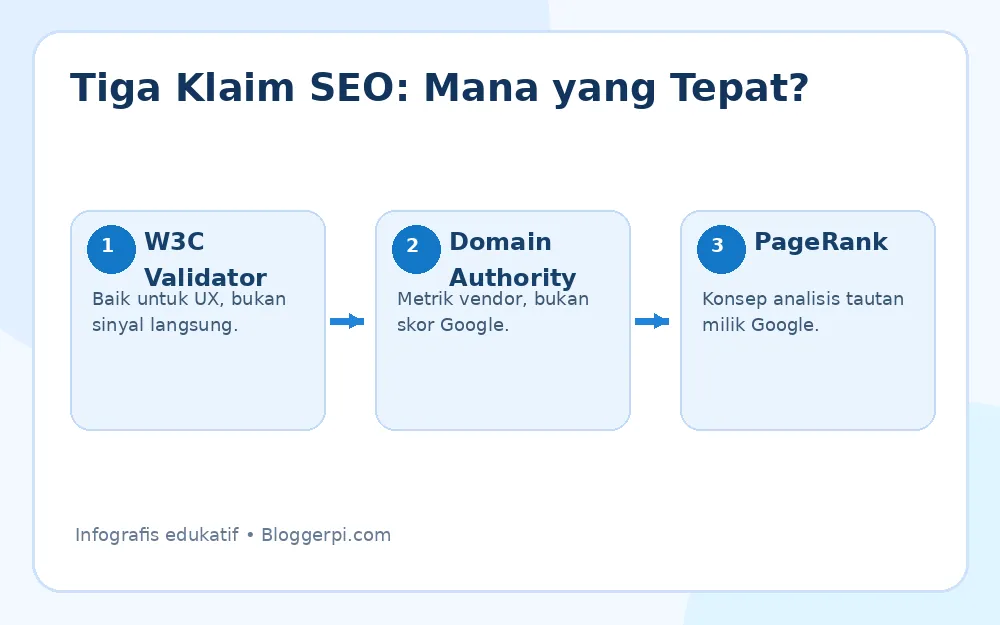
However, Google explicitly states that code validation through the W3C does not directly improve rankings.This statement is included in the FAQ about Google Search crawling and indexing. Therefore, calling “W3C validator passing” a direct ranking factor is a gross oversimplification.
When Do HTML Errors Become an SEO Problem?
Markup errors can still impact SEO if they result in unreadable content, disrupted navigation, missing links, or critical elements failing to render. For example, malformed internal links can make it difficult for users and crawlers to access related pages. Pages that respond with server errors also have a much more serious problem than a simple validator warning.
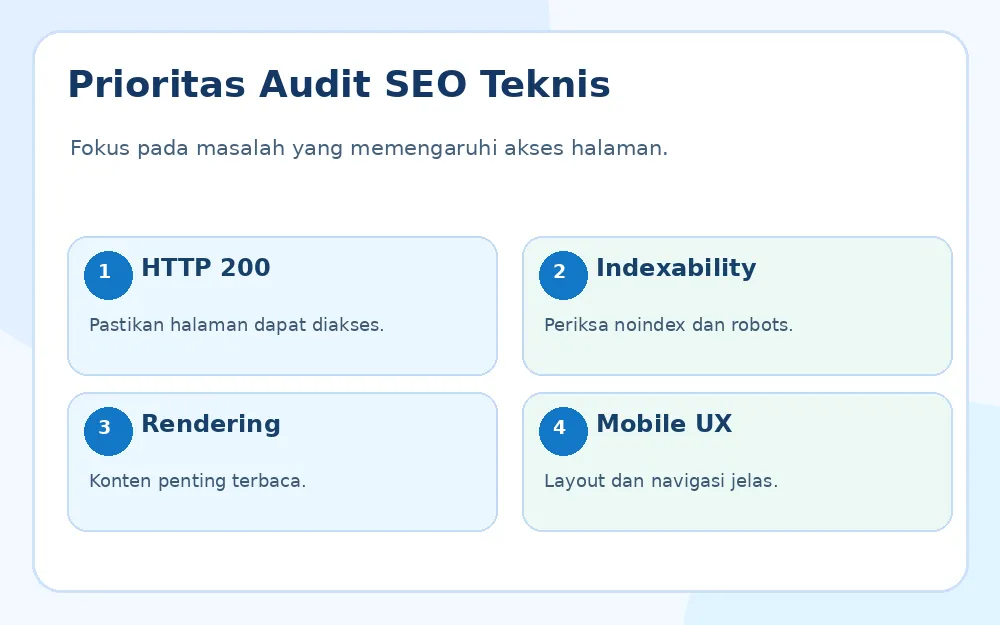
In its technical documentation, Google emphasizes three minimum requirements for a page to be eligible for indexing: Googlebot is not blocked, the page produces a successful HTTP response, and its content is indexable. These three are more important to check than pursuing a perfect validator score without understanding the impact of the problem.
How to Check and Fix HTML?
Start by opening the page on both desktop and mobile devices, then check that headings, paragraphs, images, and links appear as they should. Use an HTML validator to find markup errors, the URL inspection tool in Search Console to check indexing, and an accessibility test to check for user issues.
Prioritize errors that impact the function and structure of the document: messy headings, unlabeled form elements, broken links, truncated content, and components that are inaccessible with a keyboard. To understand the page discovery process, learn how website crawling works.
Factor 52: Domain Authority — A Useful Metric, but Not a Google Ranking Score
Domain Authority Domain Rating (DA) is a metric developed by SEO tool providers to estimate the relative strength of a domain. Other vendors, such as Ahrefs, have a similar metric called Domain Rating (DR). Each vendor’s methodology differs, so the figures are not interchangeable.
Key points: Google does not use third-party Domain Authority or Domain Rating scores as official ranking factors.These figures are calculated by each tool based on their dataset and prediction model. There’s no reason to make increasing your DA score the ultimate goal of your SEO strategy.
Are Websites with High DA Always Superior?
No. Pages from a domain with a high score aren’t automatically relevant for every search. Google evaluates pages and query context using multiple signals. An article that is specific, useful, and answers search intent can compete with pages from larger sites in some situations.
Third-party metric scores can still be helpful in benchmarking. For example, an SEO team can monitor the link profiles of their own site and competitors over time. However, these numbers should be read in conjunction with data on impressions, clicks, page quality, conversions, and the actual link profile.
How to Use Domain Authority Correctly
Use DA or DR as an initial benchmark, not a sole measure of success. Examine the pages receiving links, the topical relevance of the sources, the diversity of referring domains, and the risk of manipulative link patterns. Then, connect these findings to business priorities.
The strategic rationale can be further explored through the explanation. what is a backlink And how to get quality backlinks.
Factor 53: PageRank — A Link Analysis Concept That’s Still Relevant
PageRank is a link analysis system that played a role in the development of Google’s search engine. Simply put, the system considers the relationships between pages through links. Google’s official documentation on ranking systems states that PageRank remains part of the core ranking system, although its mechanisms have evolved significantly from its initial version.
Therefore, PageRank should not be confused with the once-publicly displayed ‘Toolbar PageRank’. That toolbar score is no longer available as a public indicator for website owners. Furthermore, PageRank is not the sole basis for determining ranking; relevance, quality systems, search context, and other mechanisms also play a role.
What is the Relationship Between PageRank and Internal Links?
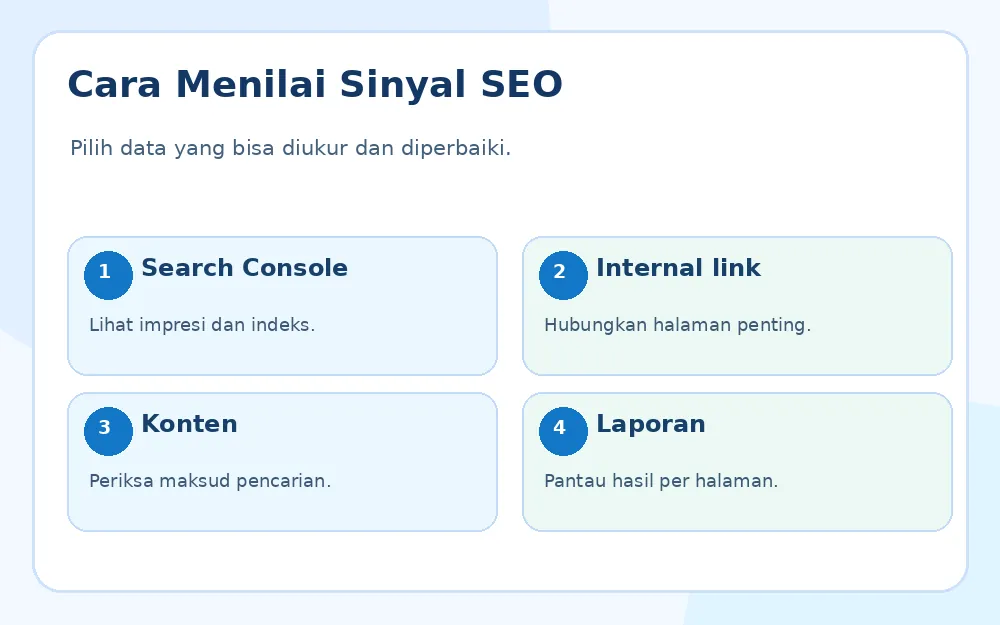
Internal links help users and search engines find related pages and understand the relationships between parts of a site. A logical link structure can make it easier to find important pages. However, creating many random links or repeating anchor text excessively is not a healthy strategy.
For example, an introductory SEO article could link readers to discussions of on-page optimization, technical SEO, and backlink guides. This flow is beneficial because it fits the reader’s learning journey, not just because it increases the number of links.
Do All Backlinks Have the Same Value?
No. The value of a link cannot be determined solely by the domain score. Contextual relevance, page quality, link placement, spam policies, and the nature of the relationship must be considered. Purchasing links to manipulate rankings may violate Google’s spam policy.
A more sustainable strategy is to publish truly reference-worthy material, facilitate the distribution of knowledge, and build reasonable editorial relationships. To implement this, learn on-page SEO strategy relevant to the quality of the page.
Summary of Myths vs. Facts of These Three Factors
| Popular claims | Assessment based on sources |
|---|---|
| Websites that pass the W3C automatically increase in ranking. | Not true. Validation isn’t a direct ranking signal, but broken markup can impact page experience and readability. |
| High DA is an authority score from Google. | Not true. Domain Authority is a third-party metric. |
| PageRank is no longer used. | Not quite. Google says PageRank remains part of its ranking system, with evolved mechanisms. |
| Google has an official public list of 200 factors. | There is no fixed official list of exactly 200 points that can be used as a checklist for algorithm weights. |
More Impactful SEO Optimization Priorities
1. Make sure the page is accessible and indexed
Start with HTTP status, robots.txt, meta robots, redirects, canonicals, and crawler-readable content quality. Check important pages in Google Search Console, especially if there’s a drastic drop in the number of indexed pages.
2. Match Content to Search Intent
Learn the questions users are trying to solve. Informational pages need to fully explain concepts and provide precise examples; transactional pages need offer details and clear decision-making information. Avoid adding text just to pad the article’s length.
3. Improve User Experience and Performance
Monitor real-world experience metrics, including Core Web Vitals, without relying on lab scores as the sole ranking factor. Check readability, mobile navigation, accessibility, and page load stability.
4. Build a Logical Internal Link Structure
Connect pillar content and supporting articles using relevant anchors. Links should help users continue learning. This structure also makes it easier for website managers to find isolated pages.
5. Strengthen Source Clarity and Content Expertise
Use primary sources when explaining official rules or product features, update sections as they change, and present evidence of experience when relevant. These principles align with the discussion Google E-E-A-T about the quality and trustworthiness of the content.
How to Evaluate Optimization Results
Compare Data Before and After Changes
Define a baseline: organic impressions, clicks, CTR, average position per query, conversions, and indexed pages. Note the date of the change so that data shifts can be interpreted in the proper context. Use a sufficiently long time span to mitigate the impact of daily fluctuations.
Separate Technical, Content, and Seasonal Impacts
Traffic changes don’t always come from a single optimization. Check for changes in search demand, competition, seasonality, or search engine updates. Avoid assuming cause and effect simply because two events occur on close dates.
Prioritize Impact on Users
Errors that prevent pages from opening, important content from being missing on mobile, or key links from being broken should be resolved before polishing smaller details that don’t impact the experience. Use data to rationally allocate team time.
Frequently Asked Questions
Is Domain Authority a Google ranking factor?
No. Domain Authority is a third-party metric that can help compare site profiles, not an official Google score.
Is invalid HTML always bad for SEO?
Not always. HTML validation isn’t a direct ranking signal. However, errors that compromise content, links, accessibility, or page functionality still need to be fixed.
Is PageRank still used by Google?
Yes. Google’s documentation still refers to PageRank as part of the core ranking system, but its mechanisms have evolved and are no longer available as a public toolbar score.
How many Google ranking factors are actually confirmed?
Google documents various systems and signals, but doesn’t publish a fixed list of exactly 200 points with weighting for each factor. Use the official documentation as a reference and evaluate each claim based on the evidence.
Conclusion
HTML validation, Domain Authority, and PageRank are three distinct concepts often confused in SEO lists. Validation helps with technical quality but is not a direct ranking signal. Domain Authority is useful as a vendor metric, not a Google score. PageRank is a link analysis concept still mentioned in Google’s ranking documentation. SEO strategies are more effective when based on user needs, page accessibility, relevant links, and demonstrable performance measurements.
Reference
- Google Search Central — A Guide to Google Search Ranking Systems.
- Google Search Central — Crawling and Indexing FAQ.
- Google Search Central — Technical Requirements.
- Ahrefs — Domain Authority/Rating and Ranking Factors.
