

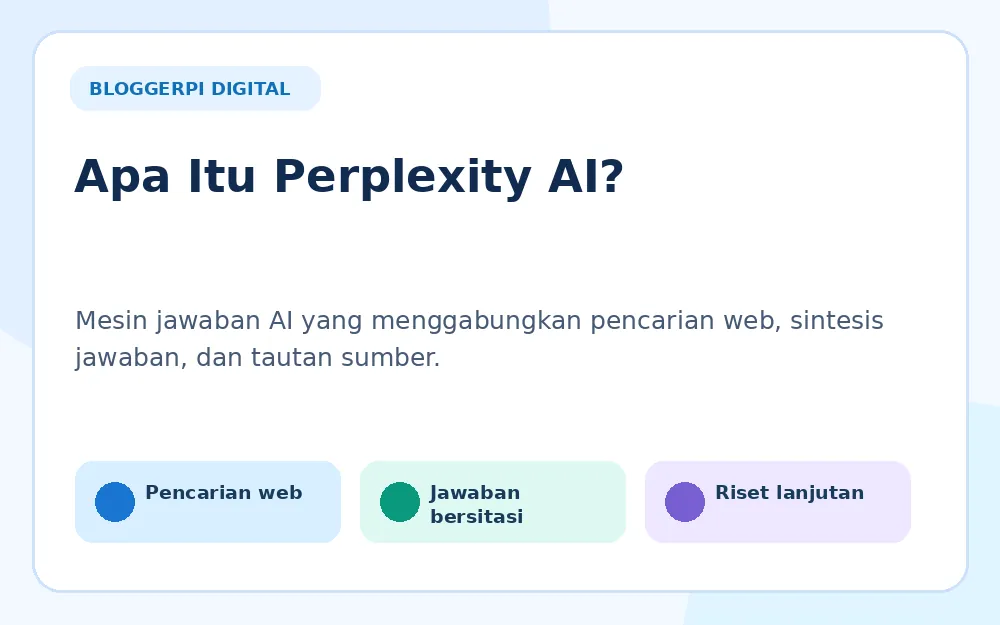
Traditional search engines typically show a list of websites you can visit to find answers. Perplexity AI aims to streamline this process by searching online sources and using artificial intelligence to create responses with citations and links readers can examine.
For content writers, SEO professionals, market researchers and business owners, this can speed up initial research. However, an automatically generated citation does not guarantee that every claim is accurate. This guide explains how Perplexity works, its features and practical uses, and how to verify the information it provides.
What Is Perplexity AI?
Perplexity is a platform AI answer engine: a system that accepts natural language queries, searches for relevant information, and then provides structured responses with references. Perplexity is accessible via the web, mobile apps, the Comet browser, and an API service for developers.
Unlike chatbots, which rely solely on information in language models, Perplexity’s core experience is built on retrieving actual sources from the web. Perplexity itself explains that its system can use more than one AI model depending on the task at hand. Model details, quotas, and package names are subject to change, so users should always consult the latest official information before subscribing.
To understand its context within the technology landscape, read understanding artificial intelligence and its impact.
How Does Perplexity AI Work?
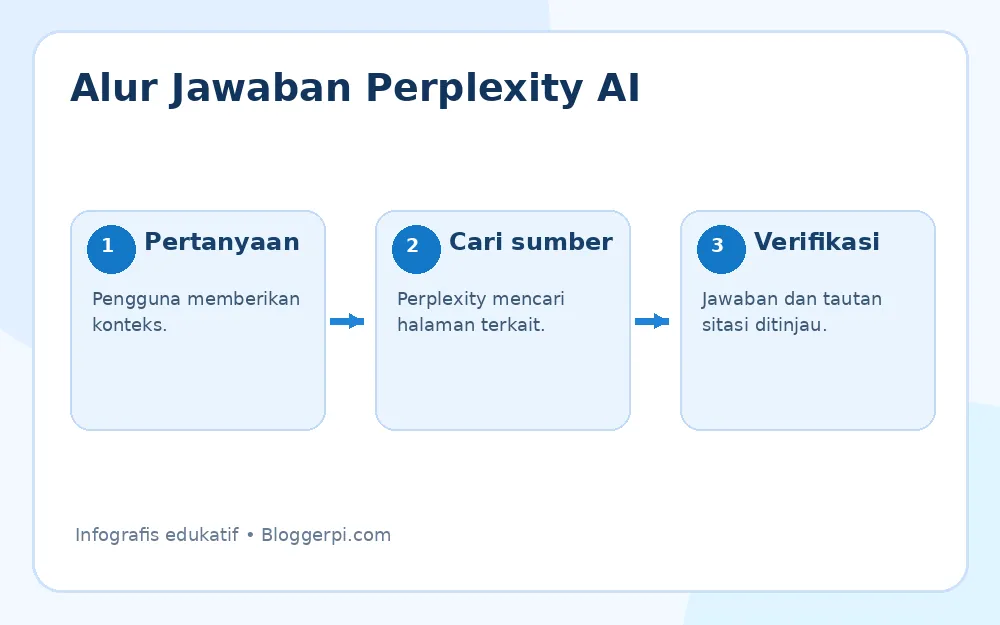
1. Interpreting User Questions
The process begins when a user enters a question, instruction, or problem they want solved. The quality of the context will influence the direction of the search. For example, the question “what is the best hosting” is very broad, while “compare hosting requirements for a WordPress online store with 5,000 daily visitors in Indonesia” provides more useful boundaries.
2. Seek Information from Relevant Sources
Perplexity searches and retrieves web information as needed. Sources can include documentation pages, publications, official websites, or other available pages. The engine does not guarantee that each selected page is a primary or most recent source.
3. Compiling Answers and Adding Citations
AI models synthesize findings into more concise answers. Citations help readers navigate sources to review claims. In some cases, answers can oversimplify the context, misread dates, or attribute citations that don’t truly support a particular claim. Therefore, the verification stage remains crucial.
4. Serving Follow-up Questions
Users can clarify focus, request comparisons, or ask follow-up questions. For example, after obtaining an explanation of an industry trend, you can request a list of primary sources and methods for validating the data before including it in the report.
Key Features of Perplexity AI
Conversation-Based Search
Users don’t have to compose keyword combinations like with conventional search engines. Queries can be written in natural language. If the first result doesn’t answer your needs, users can ask follow-up questions on the same topic, making the research process more interactive.
Answers with Citations and Source Links
The citation feature is one of the most useful differentiators. Readers can access the references and compare the AI’s explanation with the original source. However, not every citation guarantees accuracy. The source article may be outdated, the page may have changed, or a conclusion may only represent part of the information.
Research or In-depth Research
Deeper research modes allow for multi-stage exploration and synthesis for complex topics, such as competitor studies, market mapping, and initial literature reviews. In 2026, Perplexity announced an update to the Deep Research feature. Availability, usage limits, and models may vary by plan and change over time.
To achieve meaningful results, define the scope, region, time period, preferred sources, and desired format of findings. Don’t treat automated reports as a substitute for interviews, experiments, or primary data examination.
Document Analysis and Research Project Management
Perplexity provides document processing and work organization capabilities in certain packages. This is useful when users want to compare document content with public information. Ensure you have the right to upload files, understand privacy settings, and avoid sending customer data or confidential documents without the organization’s consent.
Comet Browser
Comet Comet is an AI-powered browser from Perplexity designed to integrate research assistance and web activity into the same browsing experience. According to Perplexity’s official March 2026 update, Comet is available on major platforms, including Windows, macOS, Android, and iOS. For more information on features, service areas, and automation capabilities, please check the latest documentation.
API for Developers
Perplexity also provides an API for application integration. Its official documentation currently covers services for web-based answers with citations and structured web search results. Developers need to differentiate between AI-answered answers and raw search results, as their pricing models, response times, and implementation methods differ.
How to Use Perplexity for More Effective Research
Step 1: Formulate Research Objectives
Start with a testable question. Instead of simply writing “SEO strategy,” try: “Explain the steps for a content audit for a B2B service website in Indonesia, prioritizing official Google documentation, and providing sources for each technical recommendation.”
Step 2: Limit Time and Scope
Enter the year, region, product category, and relevant assumptions. If the topic changes rapidly, have the system show the source date and distinguish confirmed facts from predictions or opinions.
Step 3: Open and Read Primary Sources
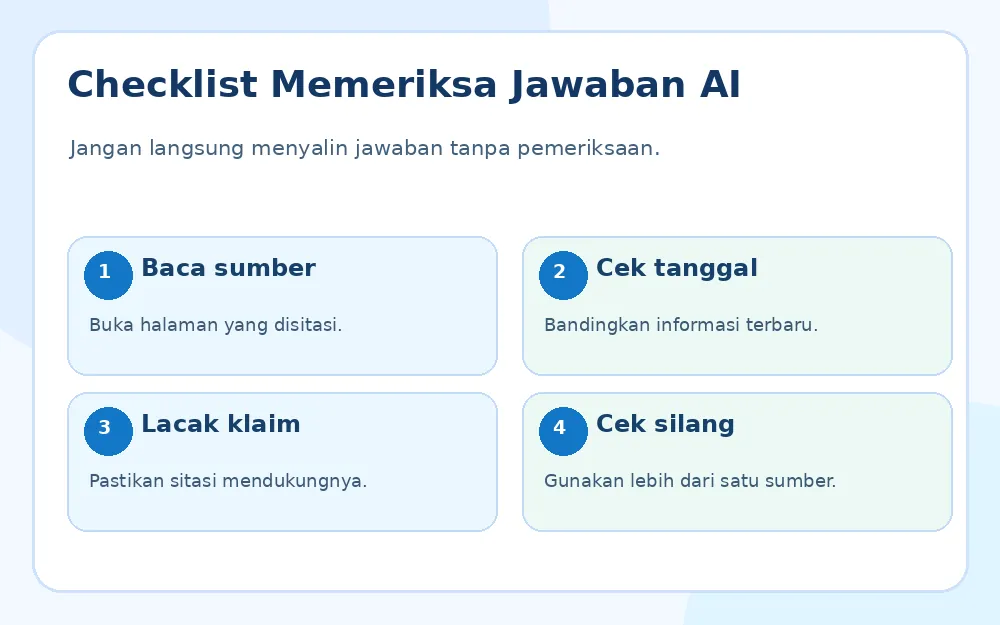
Don’t stop at summaries. Look for official documents, product announcements, or primary research. Look for passages that directly support key statements. When sources don’t match, revise the findings before citing them.
Step 4: Verify with Comparative Sources
For claims that impact business decisions, check at least one other independent source, if available. Ensure that the figures, dates, methods, and definitions are truly comparable. Not all discrepancies in results indicate error; it could be that the scope of the sources differs.
Step 5: Write Your Own Analysis
Use Perplexity’s output as research material, not as a finished article. Combine your own observations, usable internal data, implementation examples, and editorial judgment. This approach helps produce content that adds value. Learn how to structure your content. SEO-friendly articles which is oriented towards the needs of readers.
Benefits of Perplexity AI for SEO and Digital Marketing
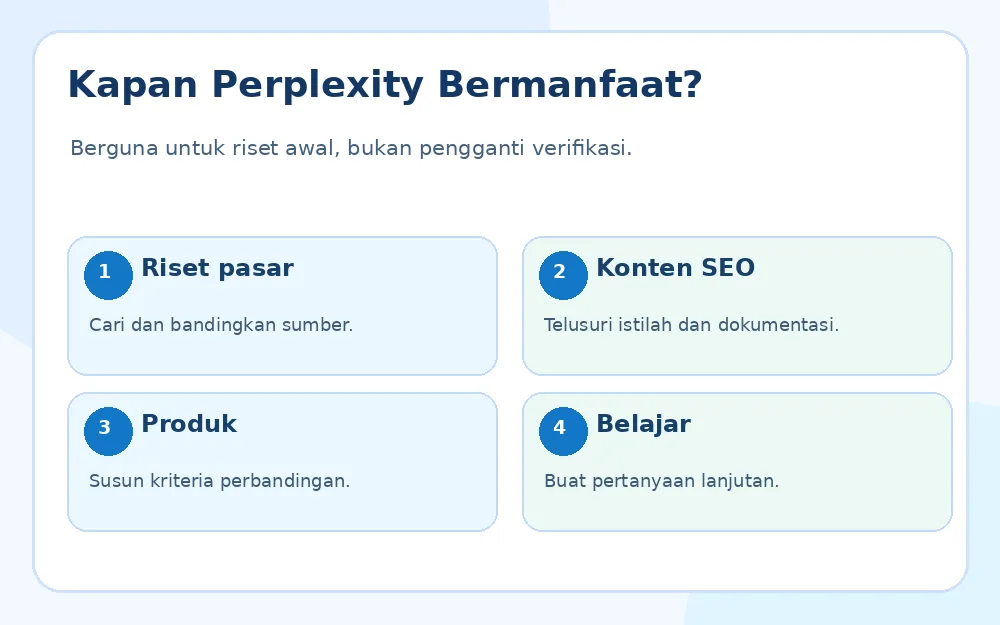
Speeding Up Topic and Term Research
Perplexity can help gather term definitions, compare official guidelines, and map frequently asked questions. These results are useful when developing content briefs, but search volume, keyword difficulty, and website performance still require specific SEO data.
Comparing Competitor Approaches
You can request a summary of service differences based on the information available on each company’s official website. Avoid jumping to conclusions about specific prices or features without consulting the source page, as details can change at any time.
Identifying Reader Questions
Use Perplexity as a brainstorming tool to explore subtopics and potential follow-up questions. Then, confirm them with Search Console data, customer interviews, or market research. how to do online marketing research using SEO can complete the process.
Creating a Source-Based Article Framework
You can request an outline with H2 and H3 headings, a list of primary sources, and sections requiring examples. However, decisions about topic, angle, and final claim should be made by an editor who understands the audience. The principle of experience and credibility in Google E-E-A-T stay relevant when writing articles that help people.
Perplexity AI vs Traditional Search Engines
Traditional search engines are often better suited when you want to explore multiple pages, compare sites, or search directly for a specific document. Perplexity excels as an interface that helps consolidate findings and respond to follow-up questions. Both approaches can be used together: discover context through AI, then confirm important information on the original page.
Perplexity also isn’t synonymous with all AI chatbots. Some chatbots can connect to specific websites or sources, and each product’s capabilities are constantly evolving. Rather than making absolute rankings, compare based on your needs: source completeness, answer accuracy, export features, privacy, and cost.
Limitations and Risks to Consider
Hallucinations and Misquoting Sources
AI models can generate details that are not supported by evidence. Available citations do not necessarily confirm every figure, recommendation, or conclusion. Therefore, crucial facts should be checked against primary sources.
Incomplete or Outdated Information
Web pages aren’t always accessible, and the most recent sources may not appear in search results. Pay special attention to the app’s regulations, pricing, launch date, and features.
Privacy and Copyright Issues
Avoid uploading confidential material without clear permission. If your content uses quotes or other sources, use proper attribution and verify the rights to use them. Do not copy AI text or web sources directly without revision.
Reliance on Short Answers
Short answers can omit nuances in research methods, exceptions, or relevant minority perspectives. For important decisions, use AI as an initial exploratory tool, not a sole authority.
Frequently Asked Questions
Is Perplexity AI free?
Basic search functionality is free, while some advanced features have different access or limitations on paid plans. Check the official pricing page for information that applies when you use the service.
Are Perplexity’s answers always accurate?
No. Even if you include a source, your answer still needs to be checked. Accuracy depends on the quality of the source, the model’s interpretation, and the nature of the question.
Can Perplexity replace Google?
Both have different experiences and advantages. Perplexity can speed up the summary of research results, while traditional search engines remain useful for direct source exploration.
Is Perplexity good for SEO article writers?
Yes, as a tool for initial research and source verification. However, authors still need to develop their own perspectives, examples, facts, and editorial experience. You can also review the explanations AI and ChatGPT as a contextual comparison.
Conclusion
Perplexity AI helps transform the search process into a conversation that generates citation-rich answers. Its primary strength lies in more targeted research and ease of source discovery. Its value is maximized when users formulate clear questions, read primary documents, verify claims, and add their own analysis before publishing results.
Reference
- Perplexity — Official product and FAQ.
- Perplexity — API documentation.
- Perplexity Changelog — Upgraded Deep Research (February 2026).
- Perplexity Changelog — Comet iOS launch (March 2026).
