


The COVID-19 pandemic status in Indonesia was officially declared over on June 21, 2023., through Presidential Decree Number 17 of 2023, which stipulates the change in status to endemic. Previously, the WHO ended the public health emergency of international concern (PHEIC) for COVID-19 on May 5, 2023. However, the end of the emergency or pandemic status does not mean that the SARS-CoV-2 virus has disappeared or no longer pose a health risk.
This article updates Bloggerpi’s reflective piece written during the initial wave of the 2020 pandemic. The author’s predictions and criticisms at the time are maintained within the context of historical experience, not information on the epidemiological situation in 2026. In addition to the official chronology, the discussion highlights the impact on business actors, content creators, and the digital industry.
When will the COVID-19 pandemic end? Differentiate four events
| Date | Incident | Meaning |
|---|---|---|
| May 5, 2023 | WHO ends PHEIC status of COVID-19 | COVID-19 was no longer an international emergency according to WHO’s assessment at that time. |
| June 21, 2023 | Presidential Decree No. 17/2023 is effective | Indonesia declares pandemic status over and shifts to endemic |
| June 29, 2023 | The Cabinet Secretariat published an explanation of the Presidential Decree | Clarification of national policy |
| August 4, 2023 | Presidential Decree No. 48/2023 is in effect | Termination of governance during the pandemic and transfer of duties |
1. What does the end of the pandemic status mean in Indonesia?
Presidential Decree No. 17 of 2023 states that the pandemic has ended and the actual condition of COVID-19 has changed to an endemic disease in Indonesia. This change relates to the government’s handling and regulatory phase, not a claim that everyone is immune or that infection is impossible. Therefore, the term endemic should be understood in the context of public health policy, not the certainty of zero individual risk.
2. Why did WHO end the state of emergency in May 2023?
WHO took into account the global situation, population immunity, and the reduced severity compared to the initial phase. The May 5, 2023, decision was to end the pandemic. Public Health Emergencies of International Concern, not an announcement that COVID-19 no longer exists. The Ministry of Health also emphasized on May 9, 2023, that the end of the global emergency does not automatically mean the outbreak has disappeared.
3. What are the conditions and concerns of society in 2020?
In the original text, the author uses Javanese expressions. “mbuh, no eruh, sak karepe dewe dewe” When asked when the pandemic will end, the article describes uncertainty, anxiety about changing policies, a personal assessment of public discipline, and a desire to reduce outdoor activities. This is one person’s perspective in 2020, not a prediction that will remain valid after the official status changes in 2023.
Author’s historical note: In the early stages of the pandemic, information about the end of the crisis was limited, while family and work decisions had to be made daily. The author criticized some public policies and hoped that government and community cooperation could accelerate control.
The old article also included a historical Twitter post from September 2020. The original link is retained as the source for that period, not the latest medical data.
4. What impact has the pandemic had on creative workers and digital businesses?
The travel, events, hotel, and travel content creator industries experienced significant disruption when mobility was restricted. Previous Bloggerpi writers have also spoken extensively about the future of travel blogging and the lives of Indonesian travel bloggers. Adaptation strategies include moving some activities online, building content channels, and reducing reliance on a single source of income.
The experiences of working from the village and working independently can illustrate why flexible work patterns and digital income are attracting attention. However, remote work opportunities vary depending on skills, internet access, company policies, and family responsibilities.
5. Lessons for MSMEs after the pandemic
Don’t rely on a single marketing channel
Businesses that rely solely on in-person customers are more vulnerable to mobility restrictions. Developing digital marketing through multiple digital marketing channels can help diversify, but each platform has its own costs and risks. Understand competitor analysis before allocating digital budget.
Maintain customer relationships and trust
Clear communication, realistic service schedules, pricing information, and consistent delivery systems become crucial when physical activity is disrupted. The principles of retaining customers can be applied with messages that demonstrate the actual service conditions, not bombastic promises.
Build content and learning assets
working within limitations Amidst limitations doesn’t mean all work has to change to being an influencer. Some businesses actually benefit from an official website, personal blog, catalogs, newsletters, and educational materials. The experiences of the joys and sorrows of bloggers and income from blogging illustrate that content monetization requires consistency, not instant results.
6. How to measure business recovery with data?
Compare pre-crisis and post-operational recovery baselines: customer numbers, revenue, margin, retention, and acquisition costs. Analyzing website traffic and data-driven marketing helps distinguish real growth from a surge in visits without transactions. Pay attention to brand positioning because changing consumer habits can make old business positioning less relevant.
For freelancers and creators, diversifying income sources such as revenue from Google or online work from home needs to be tailored to your abilities, rather than assuming everyone should make money through social media. Create a realistic content calendar to avoid pinning promotions on a single viral moment.
7. Will COVID-19 still be a concern in 2026?
Yes. The end of the pandemic does not mean that all respiratory risks are gone. For individual health information, follow the advice of healthcare professionals and local authority announcements relevant to the current situation. This article focuses on the policy timeline and business context; does not provide a diagnosis or individual therapy recommendations.
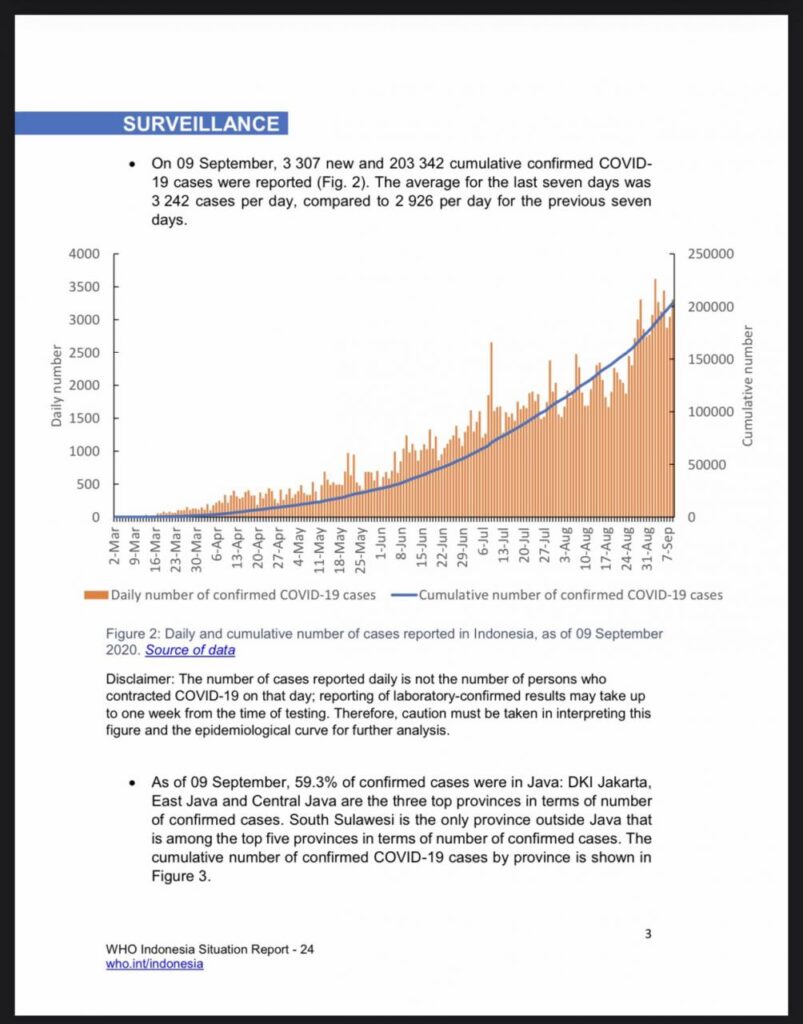
Archive of original illustrations and personal reflections from 2020
The author’s original images and captions are maintained as documentation of the early phase of the pandemic, not presented as current epidemiological graphs.
See original photo
FAQ: When will the COVID-19 pandemic end in Indonesia?
1. When will the COVID-19 pandemic officially end in Indonesia?
Presidential Decree No. 17 of 2023 stipulates a change in status, effective June 21, 2023.
2. What happened on May 5, 2023?
The WHO ended the PHEIC status for COVID-19.
3. Did the WHO declare the COVID-19 virus gone?
No. The end of a PHEIC does not mean the virus is gone.
4. What is the difference between a pandemic, an endemic, and a PHEIC?
All three explain the context of transmission, the presence of the disease, and the status of an international emergency.
5. What is the content of Presidential Decree No. 17/2023?
Declares the end of Indonesia’s pandemic status and changes to endemic status.
6. What is the function of Presidential Decree No. 48/2023?
Regulates the end of pandemic management and the transfer of duties.
7. Is COVID-19 still contagious?
Yes. The virus can still circulate even after the emergency status has ended.
8. Is 2020 data relevant for 2026 conditions?
Relevant as history, not a reflection of the number of cases or current policies.
9. Why is the travel industry severely impacted?
Mobility restrictions and decreased demand affect travel and related services.
10. What are the lessons for MSMEs?
Channel diversification, building trust, and risk management.
11. How are creators responding to change?
Developing digital skills and relevant income streams.
12. Where to check the latest health information?
Use the Ministry of Health, WHO, and authorized health workers.
External references
- Indonesian Cabinet Secretariat — Presidential Decree on Pandemic Status
- Indonesian Supreme Audit Agency — Presidential Decree No. 48/2023
- Ministry of Health — the difference between PHEIC and pandemic
- WHO Indonesia — post-PHEIC preparedness
